

"A question people ask me regularly, and one I understand they have, is this: why should I choose MuleSoft? In the world of systems integration the choice is huge. It is often not immediately clear what the big differences are, and that makes the choice difficult. So I would like to explain what the differences are and why I think MuleSoft is THE integration platform," says colleague Raymond Veltrop, senior developer/architect at Harmony.
The biggest differences
If we look at the market, there are 3 large groups into which we can divide integration solutions based on certain characteristics:
- The 'tactical iPaaS' group. Mostly point-to-point connections between requester and responder, with limited reuse.
- API managers. Proxy-like use cases with limited options for connecting and orchestration.
- Several separate products that have to be combined to provide a complete solution. Complex to manage.
So this division is mainly based on the way solutions to an (integration) problem are delivered, and on the strengths and weaknesses of those solutions.
What makes MuleSoft different?
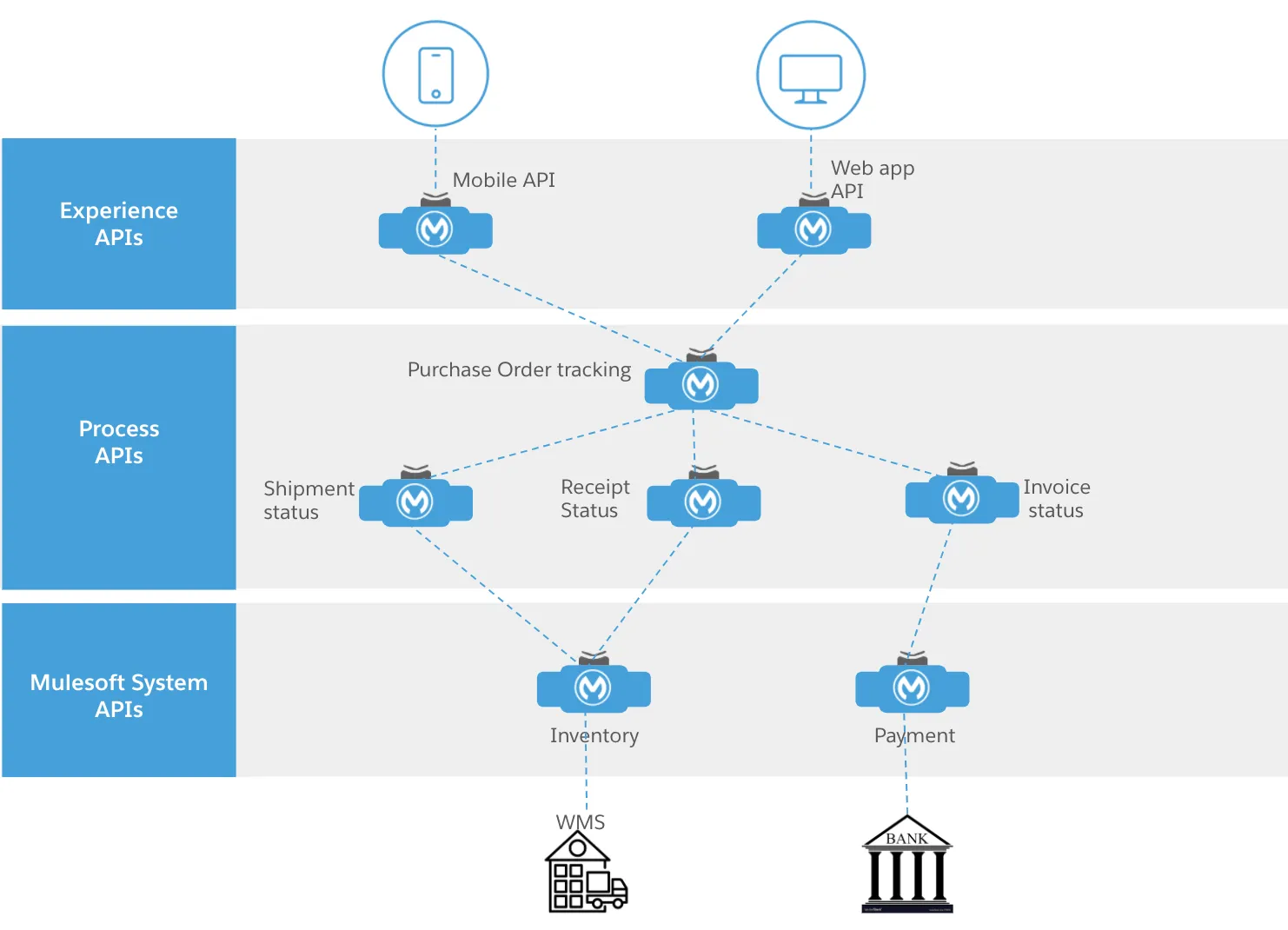
If we look at how MuleSoft is set up compared to these three groups, we see a number of characteristic differences. Compared to the first group, MuleSoft uses an approach known as API-led. Reuse is built in from the start, and point-to-point connections are avoided.
Compared to the second group, MuleSoft offers a very extensive set of connectors. This makes it possible to connect a huge range of requesting and responding systems. Transforming and orchestrating data is also a strong point, thanks to a very powerful transformation language.
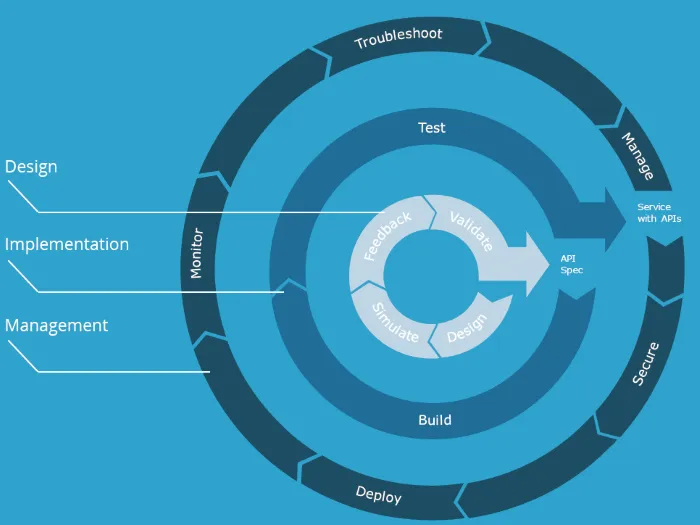
The group of platforms is highly complex, and a supplier often needs several products to provide a complete solution. MuleSoft's Anypoint Platform offers a complete solution that includes all of these parts. It lets you go through the entire development cycle: design, implementation, testing and management are all covered.
Security
...is definitely worth mentioning as one of MuleSoft's strengths. The Anypoint Platform has security options at every layer. You can use them within the APIs you develop, encryption for example, but they are also part of the platform itself. That makes it possible to arrange authentication and authorisation, for instance. SLA agreements can also be integrated into the platform.
The answer to the question
...is that MuleSoft offers a solution in which everything has been thought of and every phase of the development and management cycle is covered. With a large set of available connectors and a strong language of its own for transforming and aggregating data, it is a strong partner for integration challenges within an organisation. Good security options at every layer complete the picture.
Do you have questions about working with MuleSoft? Then contact us for more information!