
If you want to unlock data generically and make usable information secure, accessible and available in a system-agnostic way, using an integration platform is essential.
The new challenges
The application and integration landscape in healthcare is changing. At the application and infrastructure level, SaaS, cloud and web apps are the norm, and APIs are the universal plugs.
At a strategic level, we see a change in integration approach: from specific exchange to generic availability. This transformation has been going on for years, but more recent developments such as FHIR, the Wegiz, regional (data) platforms, AI and IoT have accelerated and expanded it enormously.
The MuleSoft Integration Platform, developed with an API-First approach, fits seamlessly with the questions in this new integration landscape.
The various healthcare organisations we support in implementing and using the platform have used its extensive integration and API Management capabilities to build these new integrations, while also solving and preventing a number of important strategic bottlenecks in this new landscape:
- Better management of and insight into the integrations built.
- Less dependence on system suppliers
- Cost-effectiveness through reusability in the architecture and less reliance on system suppliers
- Flexibility, both in building new integrations and in changes to the current landscape
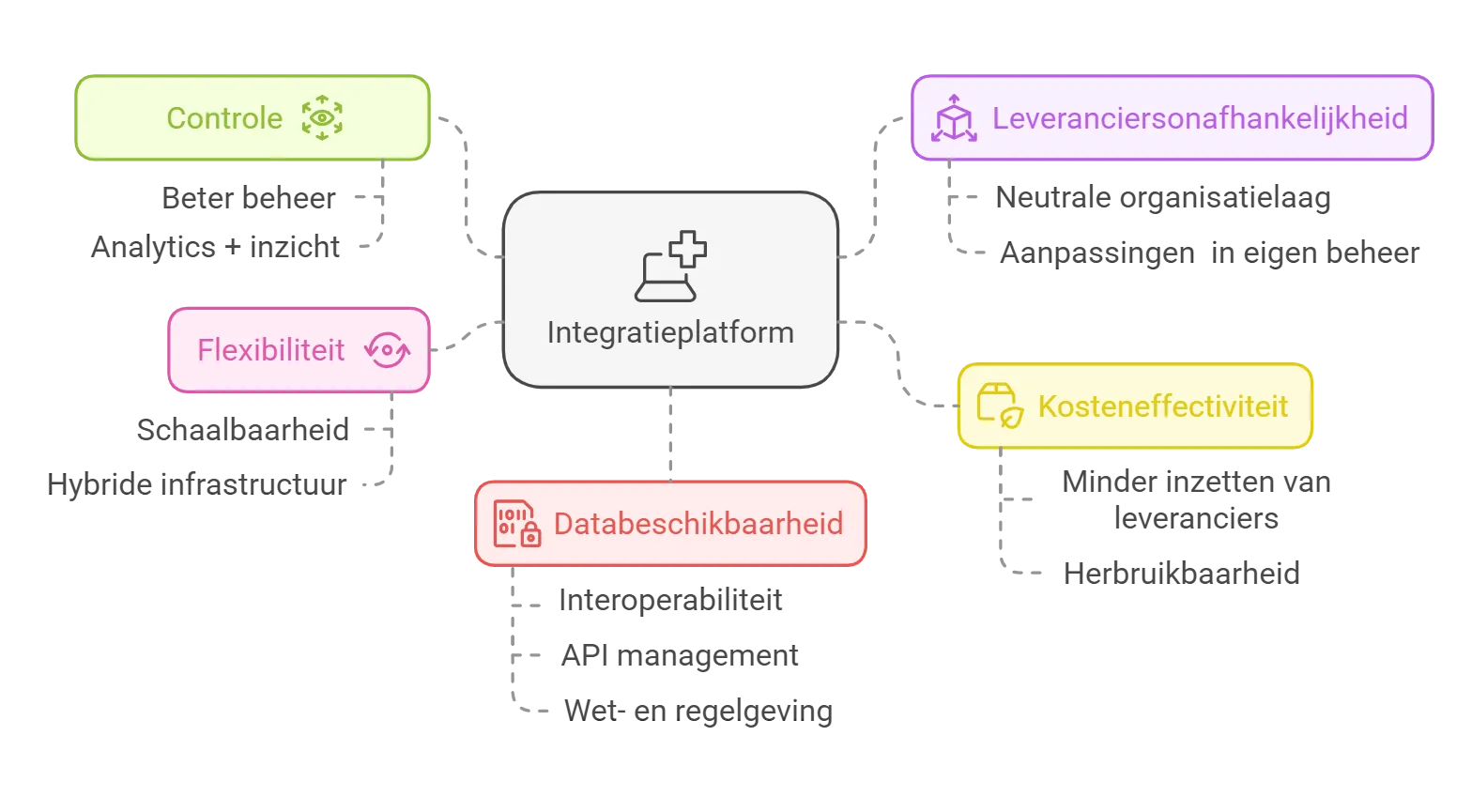
Using the MuleSoft integration platform puts these organisations back in control of their integration landscape, so that ownership of the data exchange once again matches responsibility for that data exchange.
A strategic approach is required
Despite the many advantages, an integration platform is far from being on every healthcare organisation's radar. And that is understandable.
An integration question is usually part of something else, such as a new care process or application. The integration needed is then handled as part of that project. It uses the connection options of the system suppliers involved, or looks at middleware already in use that might help. That answers the current integration question, but it also adds to the bottlenecks mentioned above in the organisation's integration landscape.
And in the "new" healthcare integration landscape, that is exactly the stage we are in: one by one, new integrations are built in a variety of ways. Point-to-point, with legacy middleware or with single-purpose supplier platforms, gateways or brokers. The bottlenecks may not cause problems (yet), but if you look at the whole picture, you can see them coming in the distance.
And that is an opportunity. An opportunity to stop these bottlenecks from growing further, but above all an opportunity to make an integration platform pay off. Every new integration built on the integration platform now avoids a double investment if you opt for an integration platform later after all.
But to seize that opportunity and look beyond the current integration question, a strategic approach is required.
A must for data availability
'Fortunately', the wish to achieve data availability will force us to take a close look at our current integration strategy anyway. Because while the other bottlenecks, challenges and the problems they cause can be overcome, that is not the case for data availability.
Data availability, described by the Dutch Ministry of Health, Welfare and Sport (VWS) as "having recorded health data available, accessible and usable for all forms of (re)use", is a development whose impact is very broad. It touches all layers and actors in the interoperability model. Data availability can therefore ultimately only be achieved across the entire chain. No single actor, system or supplier can solve it. And that is exactly what makes an integration platform so indispensable in this transformation.
After all, many systems will not (yet) support the interoperability requirements for infrastructure, applications, information and security. In some situations, usable information will consist of data from several systems. And making this information securely accessible and available places new demands on how organisations publish, share and secure it.
These are just some of the challenges in the integration landscape that data availability brings for an organisation. They are exactly the challenges the MuleSoft integration platform addresses, and they make using the integration platform a must for achieving data availability.
Discover how Harmony can help you with integration solutions!
Want to know more about how an integration platform like MuleSoft can help your organisation improve data availability and solve strategic bottlenecks? Get in touch with Harmony today and discover how we can support you in implementing an effective integration platform. Take a look at our healthcare page or contact us directly for a free, no-obligation consultation.